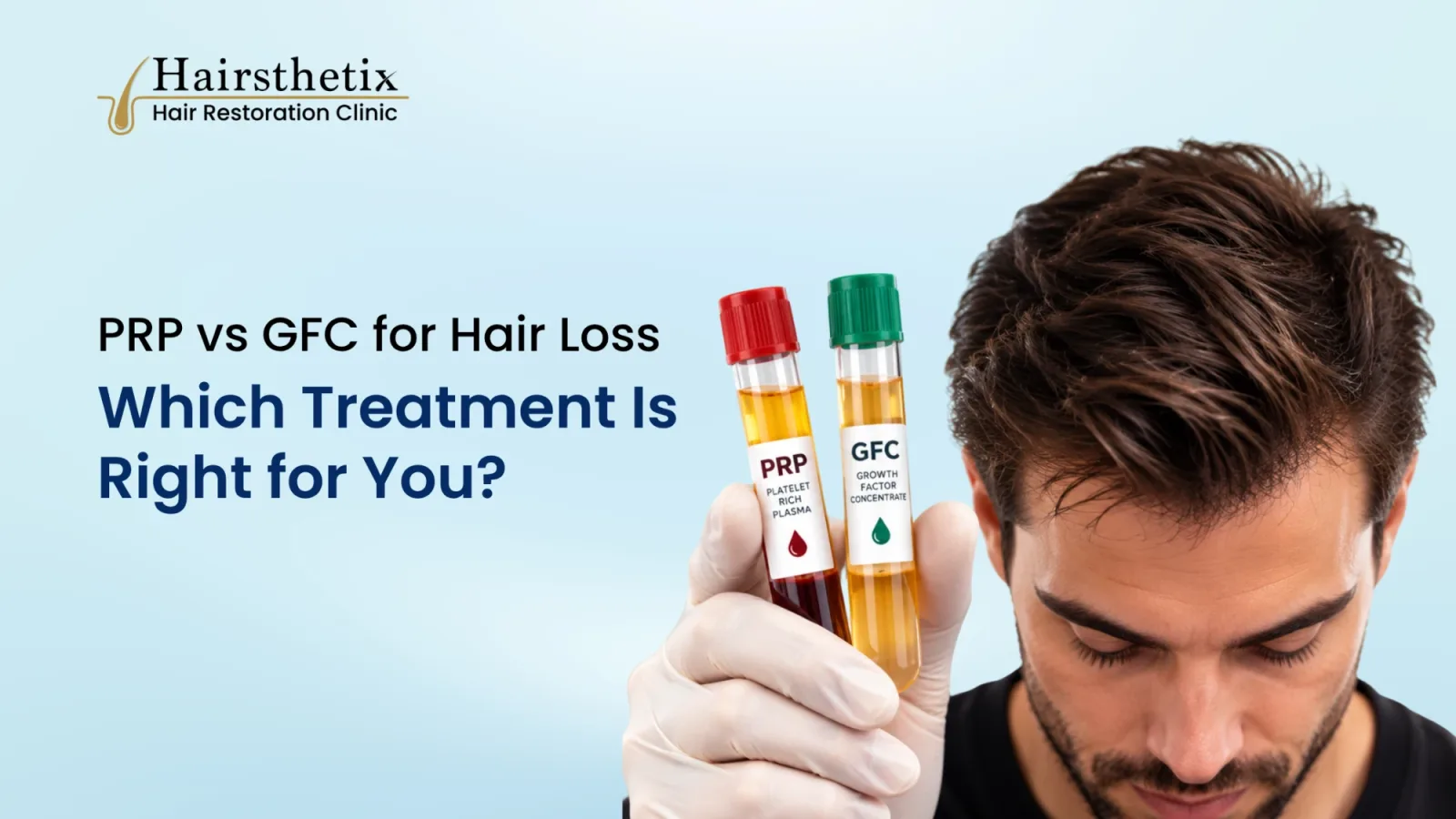
If you've started researching non-surgical hair loss treatments, you've probably come across two abbreviations again and again: PRP and GFC. Both are built on the same basic idea, which is using growth factors from your own blood to support the scalp and encourage healthier hair. But they aren't identical, and understanding the difference can help you walk into a consultation with the right questions.
This guide explains what PRP and GFC are, how they compare, and how to work out which one might suit your situation.
Why Growth Factors Matter for Hair
Hair follicles go through natural cycles of growth, rest, and shedding. In many types of hair thinning, follicles gradually spend less time in the growth phase and produce finer, shorter hairs. The goal of regenerative treatments like PRP and GFC is to support follicles that are still alive but under-performing, helping them work more effectively.
Platelets in your blood contain growth factors, which are natural signalling proteins involved in tissue repair. Both PRP and GFC aim to deliver a concentrated dose of these growth factors to the scalp, using your own biology rather than a synthetic product.
What Is PRP Therapy for Hair Loss?
PRP stands for Platelet-Rich Plasma. It's one of the most widely used regenerative treatments in hair restoration.
The process generally follows these steps:
- Blood draw: A small sample of blood is taken, similar to a routine blood test.
- Processing: The blood is placed in a centrifuge, which separates the platelet-rich plasma from the other components.
- Application: The PRP is injected into the scalp in the areas being treated.
PRP is commonly used for patients with early to moderate thinning, and it's often recommended as part of a longer-term hair maintenance plan. You can read more about how we approach it on our PRP therapy for hair loss page.
What Is GFC Treatment?
GFC stands for Growth Factor Concentrate. Like PRP, it starts with a sample of your own blood and is designed to deliver growth factors to the scalp. The difference lies in how the concentrate is prepared and what it's designed to deliver.
Where PRP focuses on concentrating platelets in plasma, GFC is a more refined preparation that aims to concentrate the growth factors themselves. In simple terms, PRP delivers the platelets that contain growth factors, while GFC aims to deliver a more targeted concentrate of the growth factors.
Many patients searching "what is GFC" are looking for exactly this explanation. If you'd like the full details of how it works in our clinic, visit our GFC treatment in Cape Town page.
PRP vs GFC: Side-by-Side Comparison
| Factor | PRP | GFC |
|---|---|---|
| Source | Your own blood | Your own blood |
| What it delivers | Platelet-rich plasma | Concentrated growth factors |
| Delivery method | Scalp injections | Scalp injections |
| Best suited to | Early to moderate thinning | Patients wanting a more refined concentrate |
| Typical plan | A course of sessions, then maintenance | A course of sessions, then maintenance |
| Downtime | Minimal | Minimal |
The honest summary is that both treatments use the same principle and are delivered in a similar way. The right choice often comes down to your hair loss pattern, your goals, and your doctor's recommendation after assessing your scalp.
What About PRF?
You may also see PRF (Platelet-Rich Fibrin) mentioned in your research. PRF is another autologous treatment that uses a different preparation method, producing a fibrin matrix that holds platelets and growth factors. If you're curious about how it compares, our PRF therapy for hair loss page explains it in more detail.
Who Is a Good Candidate?
Regenerative hair treatments tend to work best for people whose follicles are still active. This typically includes:
- Patients experiencing early or moderate thinning
- People who want a non-surgical option
- Patients already using treatments like minoxidil or finasteride who want to add extra support
- Those who have had a hair transplant and want to support healing and density
Treatments like PRP and GFC are generally less effective in areas where follicles have been lost completely, since there's nothing left to stimulate. That's why an accurate scalp assessment matters before starting any plan.
What to Expect From a Session
Most patients find the experience comfortable. A numbing approach may be used to reduce discomfort during the scalp injections, and the whole appointment is typically completed within a single visit.
After treatment, mild redness, tenderness, or tightness in the scalp is common and usually settles quickly. Most people return to their normal routine soon afterwards, though your doctor will give you specific aftercare guidance, such as when to wash your hair and what to avoid in the first day or two.
How Many Sessions Will You Need?
Hair responds slowly, so results from PRP and GFC build gradually rather than appearing overnight. Most plans involve an initial course of sessions spaced several weeks apart, followed by periodic maintenance sessions.
Visible changes, such as reduced shedding or improved thickness, are generally assessed over a period of months rather than weeks. Individual results vary depending on your hair loss pattern, how long it has been progressing, and your overall health, so it's important to have realistic expectations from the start.
Can PRP or GFC Be Combined With Other Treatments?
Yes, and many patients do exactly that. Regenerative treatments are often used alongside medical therapy such as minoxidil or finasteride, and as part of a broader plan that may include supplements or, in some cases, surgery. Combining approaches can be more effective than relying on a single treatment, but it should be guided by a doctor who understands your hair loss pattern.
Choosing a Provider
Because both treatments involve handling your blood and injecting the scalp, it's important that they're performed by a qualified medical professional in a clean, properly equipped setting. During a consultation, a good provider will examine your scalp, explain the options clearly, and give you a realistic view of what to expect rather than promising guaranteed outcomes.
You can see real patient outcomes in our before-and-after gallery, read experiences on our testimonials page, and check current pricing on our pricing page.